
Name a resource’s creator the way the creator asks
Find the credit attached to an Indigenous resource and keep its names and use instructions with your reading-list entry.
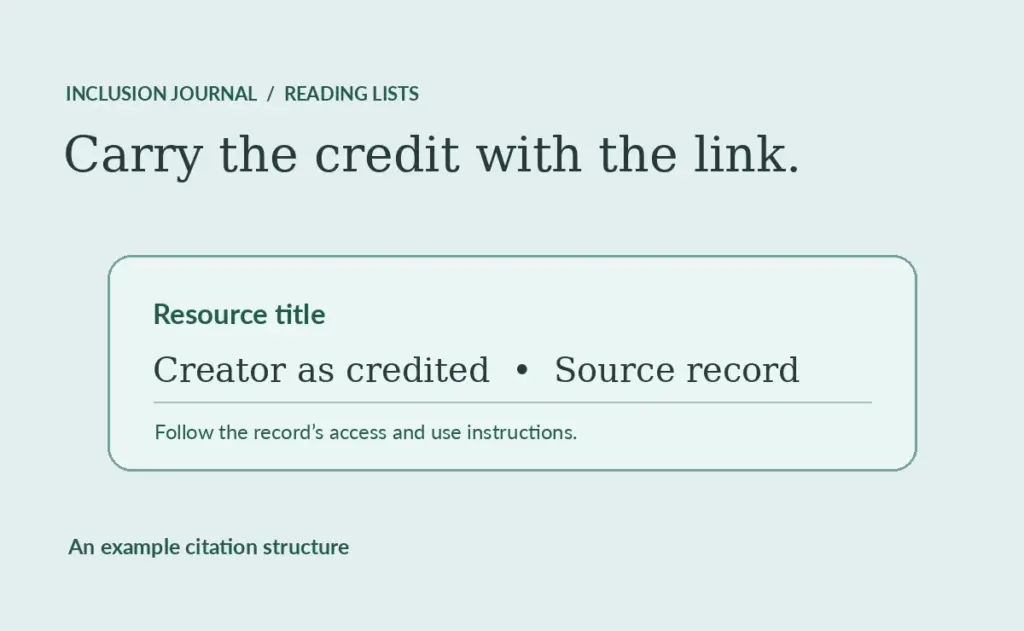
Before adding an Indigenous resource to a reading list, look for the name the creator or community uses on the resource itself. Carry that name and any stated attribution instructions into your entry. If an older directory uses a different name, keep the difference visible while you check the source.
Find the name in context
Start with the resource’s publisher or creator. Look at the title page, catalogue record or project page for the form of the name they use and the role it describes. A writer, a community named in a notice and an organisation hosting a file may each have a different place in the credit. A single “source” field can hide those differences.
For a fictional example, imagine a handout whose PDF says “Prepared by the Field Notes group” and whose current landing page adds separate roles for contributors and publisher. An old directory names only the host library. The reading-list entry can name the authors as credited on the resource and identify the library as the place the copy is held. If the sources disagree about a name or role, record the discrepancy and follow the publisher’s stated route for asking about it.
Read a label where it is applied
Local Contexts describes its TK Attribution Label as a tool a community can use to indicate the correct names and credits for material. Its guidance explains that communities determine how to use the Labels and can adapt their descriptions. If a record carries a Label, read the information with that record and preserve its context when you link to it. Local Contexts on the TK Attribution Label and Local Contexts Label guidance.
Write down the credit line, the source address and any access or use instructions that accompany it. For republication, follow the relevant permissions and instructions. The reading-list entry can point readers to the source record even when you need to check whether a copy may be shared.
Make it easy to correct the entry
Give readers a way to send an updated credit or link. Keep a private note of which source you consulted and when, so a correction can be checked without relying on memory. When the resource provides a suitable point of contact, use the contact route it specifies and ask one concrete question. You might ask which credit should appear in a catalogue entry that links to the original.
A good credit line makes it easier to find and recognise the people behind the resource. It also leaves a trail that someone else can follow when names or records need to be updated.